
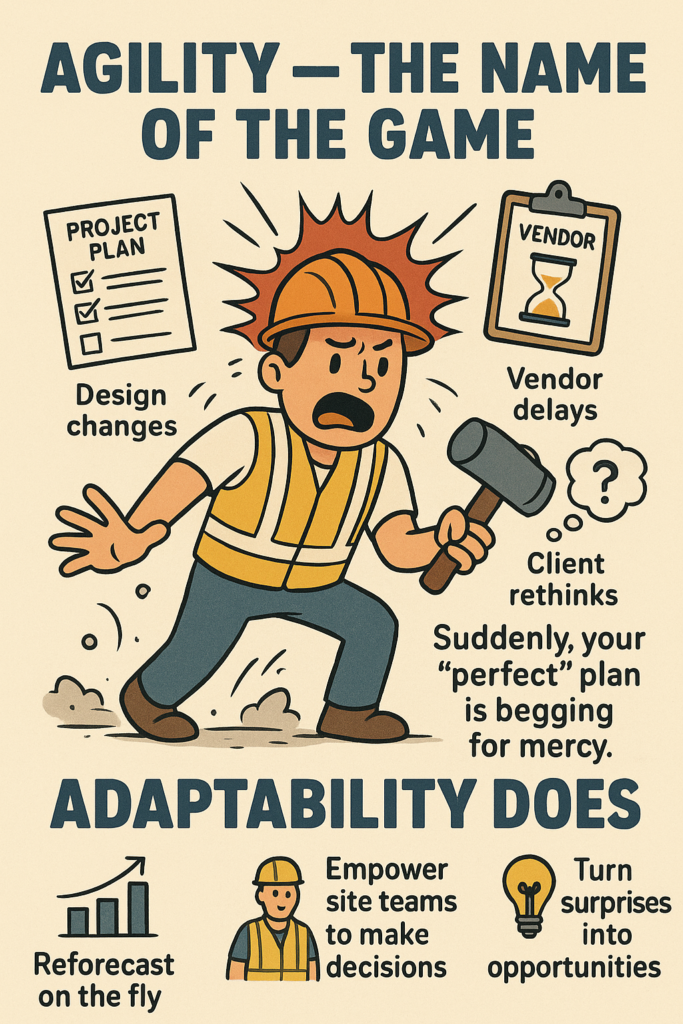
Modern EPC projects demand a dynamic, responsive approach. The best project teams understand that plans are guides, not guarantees. Agility allows teams to pivot, respond, and even leverage unexpected changes as opportunities.
Here’s how top-performing EPC teams embrace agility:
1. Reforecast on the Fly
Instead of clinging to a static project plan, agile EPC teams continuously update schedules and forecasts based on real-time data. This approach ensures that decisions are made with the most accurate information available, helping to minimize delays and budget overruns.
Example: A supplier delay could trigger a rescheduling of dependent tasks, allowing teams to stay productive while waiting for materials.
2. Empower Site Teams to Make Decisions
Field teams are closest to the challenges on-site. Agile EPC teams give site managers and engineers authority to make rapid decisions, reducing bottlenecks and improving response times.
Example: Allowing site engineers to approve minor design adjustments can save weeks of waiting for central approvals.
3. Turn Surprises into Opportunities
Unexpected challenges don’t have to be setbacks—they can be opportunities for innovation and value creation. Agile teams treat surprises as chances to improve processes, enhance client satisfaction, and even discover upsell or efficiency opportunities.
Example: A last-minute design change could inspire a more efficient workflow, reducing costs while improving quality.
Practical Steps to Build Agility in Your EPC Team
Transitioning from control to agility doesn’t happen overnight, but there are practical steps teams can take:
- Daily stand-ups: Quick check-ins to identify obstacles and adjust priorities.
- Flexible resource allocation: Shift manpower and equipment based on real-time project needs.
- Rapid decision-making protocols: Clear delegation of authority for urgent decisions.
- Continuous feedback loops: Encourage team members to share insights from the field, which can inform project adjustments.
By embedding these practices, EPC teams not only manage uncertainty but leverage it to deliver better outcomes for clients and stakeholders.
The Bottom Line: Agility Wins
In the past, control defined success in EPC projects. Today, agility is the competitive advantage. Teams that can pivot, adapt, and respond quickly are better equipped to handle challenges, keep projects on track, and deliver superior results.
Next time a vendor delay, design change, or unexpected client request hits your project, remember: it’s not a failure—it’s a chance to demonstrate agility, problem-solving, and innovation.
Join the Conversation
What’s one agile habit that has strengthened your EPC project team? Whether it’s flexible scheduling, empowered site teams, or rapid decision-making protocols, share your insights in the comments below. Your experience could help fellow EPC managers navigate today’s evolving project landscape.