
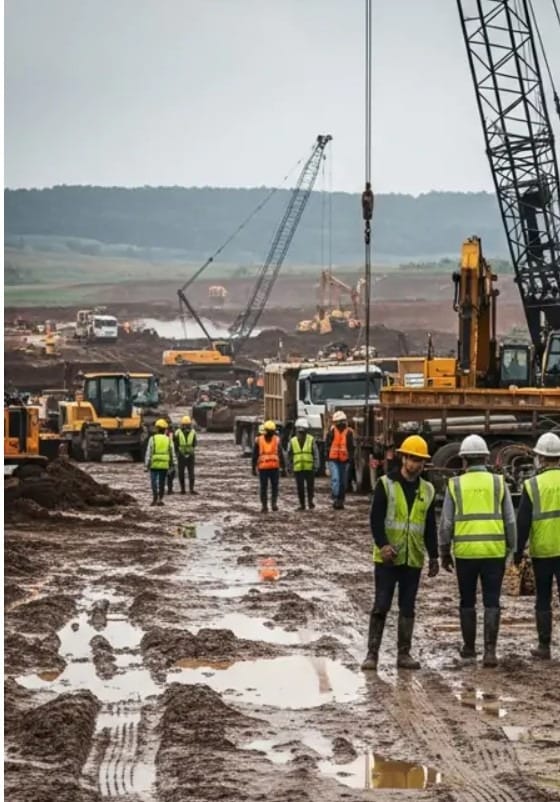
Why Project Site Visits Matter More Than Status Reports
One of the most persistent risks in project delivery isn’t lack of planning or competence. It’s distance from the site.
Drawings, schedules, procurement plans, and status reports create a sense of certainty. But that certainty often exists only on paper. Once execution begins, site conditions, physical constraints, and human realities reshape decisions in ways no document can fully capture.
This is where many teams fall into analysis paralysis—adding reviews and reports instead of clarity.
👉 https://projifi.blog/overcoming-analysis-paralysis-leadership/
A project site visit framework treats site presence not as oversight, but as a structured decision-making tool. Site visits are not a formality. They are a decision-making tool.
The 4 Pillars of a Project Site Visit Framework
Every effective project site visit framework addresses how different functions interact with site reality. These four pillars reflect the most consistent patterns where remote decision-making creates preventable execution risks.
1. Design Verification and Physical Reality Alignment
Design teams create technically sound solutions, but drawings flatten spatial reality in ways that site presence immediately corrects.
A Real-World Pattern: Cable Routing vs Drawings
Across multiple projects, one issue surfaces repeatedly after steel erection: cable routing almost never follows drawings exactly.
On paper, routing looks clean—clear paths, sufficient clearances, logical sequencing. But once steel is erected, ground reality intervenes:
- Actual clearances reduce
- Access paths shift
- Temporary supports appear
- Interfaces multiply
| Drawing Assumption | Site Reality | Framework Response |
|---|---|---|
| Routing paths clear | Clearances reduce with actual steel | Verify routing during steel erection |
| Access as designed | Access paths shift during construction | Walk installation sequences on site |
| Interfaces documented | Interfaces multiply on site | Coordinate disciplines at site level |
| Sequencing follows plan | Temporary supports change approach | Adapt based on physical constraints |
At site, routing decisions evolve based on what can actually be installed safely and efficiently. These deviations are not errors—they are rational responses to physical constraints that drawings cannot fully anticipate.
Construction drawings are essential, but even industry guidance acknowledges that they rarely reflect site conditions exactly once execution begins.
👉 https://www.designingbuildings.co.uk/wiki/Construction_drawings
Without seeing this firsthand, it’s easy to assume non-compliance. On site, it becomes clear that adaptation is inevitable.
Key Takeaway: Drawings describe intent. Site conditions determine feasibility.
Design Teams and Scale Blindness
🔷 PRACTITIONER INSIGHT: I’ve often seen design teams struggle to appreciate the physical scale of equipment—not due to lack of skill, but because drawings flatten reality.
Equipment that fits neatly on layouts behaves very differently when placed on site:
- Access becomes constrained
- Maintenance clearances feel tighter
- Installation sequences collide
A site visit recalibrates design judgment in minutes—something weeks of remote coordination often fails to do.
This disconnect shows up repeatedly when execution reality collides with schedule pressure.
👉 https://projifi.blog/epc-project-scheduling-leadership-challenge-timelines/
Key Takeaway: Logistics planning without site context often optimizes cost at the expense of execution risk.
2. Procurement Logistics and Site Readiness Verification
Procurement planning frequently optimizes cost and delivery timing while assuming site conditions will accommodate material receipt, storage, and protection.
Procurement Assumptions About Site Readiness
🔷 PRACTITIONER INSIGHT: Procurement plans frequently assume that once materials reach site, they can be stored safely and protected from weather.
In reality, many sites:
- Lack adequate covered storage
- Face space constraints
- Operate under evolving access and handling limitations
| Procurement Assumption | Typical Site Reality | Framework Response |
|---|---|---|
| Covered storage available | Limited covered area prioritized for critical materials | Walk storage areas before major deliveries |
| Laydown space as drawn | Space consumed by temporary facilities | Verify current space availability on site |
| Weather protection standard | Environmental exposure varies significantly | Assess actual protection needs firsthand |
| Handling equipment accessible | Ground conditions and congestion limit access | Coordinate handling resources during visit |
These assumptions often remain invisible until procurement teams physically visit the site and see conditions for themselves.
Key Takeaway: Procurement site visits transform logistics planning from document-based assumptions into execution-aligned strategies.
3. Support Function Context and Decision-Making Calibration
Finance, administration, and support teams operate with limited visibility into site conditions. This distance creates a perception gap where site challenges seem like management issues rather than physical realities.
Support Functions and the Illusion of “Everything Is Fine”
🔷 PRACTITIONER INSIGHT: Finance, administration, and support teams often believe site conditions are manageable—until they visit.
I’ve seen perceptions change instantly when teams:
- Walk long access routes
- Experience heat, dust, or weather exposure
- Observe constraints faced daily by site personnel
| Support Function | Decision Context | Impact After Site Visit |
|---|---|---|
| Finance | Payment approval cycles | Urgency shifts seeing actual work pace |
| HR/Administration | Resourcing decisions | Constraints become visible and actionable |
| Procurement | Approval thresholds | Material delays show immediate crew impact |
| Quality/Safety | Documentation requirements | Field workflows inform practical priorities |
Site visits don’t just create empathy—they improve decisions around resourcing, approvals, and prioritization.
Key Takeaway: When support functions experience site realities directly, administrative decisions align with execution priorities instead of working against them.
4. Strategic Timing and Transition Period Focus
Not all project phases benefit equally from site visits. The framework prioritizes presence during specific execution periods when decisions carry irreversible downstream consequences.
When Site Visits Matter Most
From experience, site visits are especially critical when:
- Execution is transitioning from design to construction
- Interfaces between disciplines are increasing
- Constraints are emerging faster than plans can adapt
- Decisions carry irreversible downstream impact
| Project Phase | Why Visits Matter Most | Who Should Visit |
|---|---|---|
| Design → Construction transition | Physical constraints emerge, design assumptions face reality | Design leads, engineering managers |
| Steel erection completion | Routing, access, clearances become physical reality | All discipline leads, procurement |
| Multi-discipline interface peaks | Electrical/mechanical/civil overlaps multiply | Interface coordinators, construction managers |
| Pre-commissioning | Incomplete work items and access restrictions surface | Commissioning team, operations handover leads |
| Punch list execution | Execution constraints and access sequences become critical | Project controls, quality, construction |
In these moments, distance slows learning. Presence accelerates it.
Industry perspectives on construction consistently reinforce the importance of site presence in identifying risks early and aligning teams.
👉 https://www.constructionplacements.com/site-visits-in-construction/
Key Takeaway: Strategic timing transforms site visits from observation activities into intervention opportunities that prevent problems rather than discovering them.
Common Pitfalls in Project Site Visit Frameworks
Even well-intentioned site visit programs fail when they treat presence as oversight rather than decision-making calibration.
| Pitfall | Impact | Prevention |
|---|---|---|
| Treating visits as inspections | Creates defensive behavior, hides problems, reduces information flow | Frame visits as “decision support” not “checking work” |
| Visiting only during positive milestones | Misses critical constraint periods, creates false confidence | Prioritize transition phases and interface-intensive periods |
| Remote teams visiting as tourists | No context, asks wrong questions, consumes site time without value | Pre-visit briefings on current constraints and decision needs |
| No follow-up decision changes | Site visits seen as theater, teams stop engaging authentically | Document decisions made differently because of site presence |
| Visiting without talking to field crews | Sees physical site but misses execution intelligence | Framework requires crew conversations, not just observation |
Site visits that don’t result in better decisions are performance theater, not execution tools.
Turning Site Presence Into Execution Clarity
The cable routing pattern, design scale blindness, procurement storage disconnect, and support function perception gaps share a common thread: competent professionals making suboptimal decisions because they’re working from representations of reality rather than reality itself.
Being present:
- Reveals constraints early
- Sharpens judgment
- Improves coordination across functions
- Reduces rework driven by misaligned expectations
Most importantly, site visits replace abstract discussions with shared reality.
This same principle underpins trust-based decision-making in execution environments, where judgment matters more than hierarchy.
👉 https://projifi.blog/why-trust-really-beats-supervision-in-epc-projects/
Projects struggle not because people don’t care—but because decisions are made without seeing the full picture. Drawings, reports, and meetings are necessary. They are not sufficient.
If you want better decisions, fewer surprises, and stronger alignment across teams, there is no substitute for standing where the work is happening.
That lesson doesn’t come from theory. It comes from experience.
Key Takeaways: Building Your Project Site Visit Framework
Organizations strengthen execution predictability by embedding structured site presence across functions:
Design Verification Through Physical Reality Alignment
Design teams calibrate technical solutions against spatial realities by walking erected structures during transition phases. Cable routing almost never follows drawings exactly once steel is erected—clearances reduce, access paths shift, and interfaces multiply. Schedule design team visits after major structural milestones but before downstream installations lock in to catch these inevitable adaptations early.
Procurement Logistics Aligned With Site Readiness
Procurement leadership verifies storage assumptions, handling capabilities, and environmental protection requirements by physically assessing laydown areas. Many sites lack adequate covered storage, face space constraints, and operate under evolving access limitations that only become visible on site. Include procurement in site visits before major material deliveries and during high-flow periods.
Support Function Decisions Calibrated to Execution Realities
Finance, HR, and administrative teams make better resourcing, approval, and process decisions after walking long access routes, experiencing weather exposure, and observing daily constraints faced by site personnel. Site visits for support functions aren’t about construction knowledge—they’re about understanding the environment where their decisions create consequences.
Strategic Timing During High-Impact Transition Periods
Concentrate site presence when design becomes physical, when disciplines overlap intensively, and when decisions carry irreversible downstream consequences. Visits during design-to-construction transition, steel erection completion, and interface peaks create maximum value compared to periodic executive tours of completed areas.
Comparison: Weak Approach vs. Strong Project Site Visit Framework
| Weak Approach | Strong Project Site Visit Framework |
|---|---|
| Quarterly executive tours of completed areas | Visits timed to transition phases and interface peaks |
| Site visits as oversight and inspection | Site presence as decision-making calibration tool |
| Remote teams visit only for problems | All functions visit during their high-impact periods |
| No change in decisions after visiting | Documented decision improvements from site presence |
| Choreographed routes avoiding active work | Random access to work areas with crew conversations |
Distance doesn’t just slow information flow. It distorts judgment in ways that more reports cannot fix.
FAQ Section: Project Site Visit Framework
Optimized for FAQ Schema / Rich Snippets
What is a project site visit framework?
A project site visit framework is a structured approach to using physical site presence as a decision-making tool rather than an oversight activity. It defines which functions should visit site, during which project phases, and how to translate site observations into execution-aligned decisions. The framework prioritizes design verification, procurement logistics assessment, support function context building, and strategic timing during transition phases. Unlike generic site inspection checklists, a project site visit framework addresses the decision-making gap created by distance from where work happens, particularly critical in EPC and capital project execution.
How is a project site visit framework different from regular site inspections?
Site inspections focus on compliance verification—checking that work meets specifications, safety standards, and quality requirements. A project site visit framework focuses on decision calibration—helping remote functions understand physical constraints, spatial realities, and execution dynamics that aren’t visible in documents. Inspections look for problems; frameworks prevent problems by collapsing the distance between decision-makers and consequences. Both serve important purposes, but frameworks address strategic alignment while inspections address tactical compliance. They complement each other rather than compete.
What are the 4 pillars of a project site visit framework?
The four pillars are: (1) Design Verification and Physical Reality Alignment—addressing how cable routing almost never follows drawings exactly once steel is erected; (2) Procurement Logistics and Site Readiness Verification—confirming that sites actually have adequate covered storage and space for materials; (3) Support Function Context and Decision-Making Calibration—exposing finance, HR, and administrative teams to access routes, weather exposure, and daily constraints; and (4) Strategic Timing and Transition Period Focus—concentrating presence during design-to-construction transition, steel erection completion, and interface peaks. These pillars address where distance most consistently distorts judgment.
Why do project site visit programs fail even with regular visits?
Most failures stem from treating visits as oversight theater rather than decision tools. Common failure modes include: visiting only during positive milestones (missing critical constraint periods), following choreographed routes that avoid problems, making no decision changes based on site observations, and framing visits as inspections that create defensive behavior. When site visits don’t result in demonstrably better decisions, field teams recognize them as performance activities and stop engaging authentically. Successful frameworks require commitment to decision-making based on site presence, not just observation.
How can organizations improve execution alignment using a project site visit framework?
Organizations improve alignment by: (1) timing visits to transition phases (design-to-construction, steel erection completion, interface peaks) rather than arbitrary schedules; (2) requiring function-specific visits (procurement walks storage areas, design teams verify spatial constraints, support functions experience site conditions); (3) documenting decisions made differently because of site presence to reinforce value; (4) structuring visits around crew conversations not just observation; and (5) measuring framework effectiveness through reduced rework, faster decision cycles, and improved interface coordination. Implementation typically starts with one pilot function before expanding.
What role does design verification play in a project site visit framework?
Design verification through site visits addresses the fundamental limitation of creating three-dimensional solutions from two-dimensional representations. Cable routing almost never follows drawings exactly after steel erection—actual clearances reduce, access paths shift, temporary supports appear, and interfaces multiply. Design teams struggle to appreciate physical scale of equipment not due to lack of skill, but because drawings flatten reality. Site visits recalibrate design judgment in minutes, something weeks of remote coordination often fails to do. This prevents situations where technically correct designs require costly adaptation during installation.
How does procurement logistics assessment strengthen a project site visit framework?
Procurement planning frequently assumes that once materials reach site, they can be stored safely and protected from weather. In reality, many sites lack adequate covered storage, face space constraints, and operate under evolving access and handling limitations. These assumptions remain invisible until procurement teams physically visit site and see conditions for themselves. Physical site visits reveal whether designated storage areas exist as drawn, if covered storage has capacity, how environmental conditions affect material protection, and whether handling equipment can access laydown areas. This prevents excellent procurement deals from creating execution problems through damaged materials or delivery timing that doesn’t match site readiness.
What is the most common mistake in implementing project site visit frameworks?
The most common mistake is treating frameworks as additional reporting requirements rather than decision-making tools. Organizations implement visit schedules, documentation templates, and observation checklists without changing how decisions get made based on site presence. Field teams recognize this immediately—if visits don’t result in faster decisions, adjusted plans, or removed obstacles, they’re correctly seen as overhead. The pattern that works: require decision-makers to identify one execution decision they’ll make differently because of each site visit, and track those decisions publicly. When frameworks demonstrably improve outcomes, they become embedded in execution culture rather than compliance activities.


