
Project managers rarely get the spotlight when things go right, but they’re often the first name mentioned when things go wrong. They carry the pressure of deadlines, the ambiguity of shifting scope, and the responsibility of aligning people who don’t report to them—while still being expected to project calm, confidence, and control.
This is a real look at why PMs absorb so much blame, why the role can feel like invisible emotional labor, and how to stay calm, credible, and effective without burning out.
Why PMs Feel the Pressure More Than Anyone Else
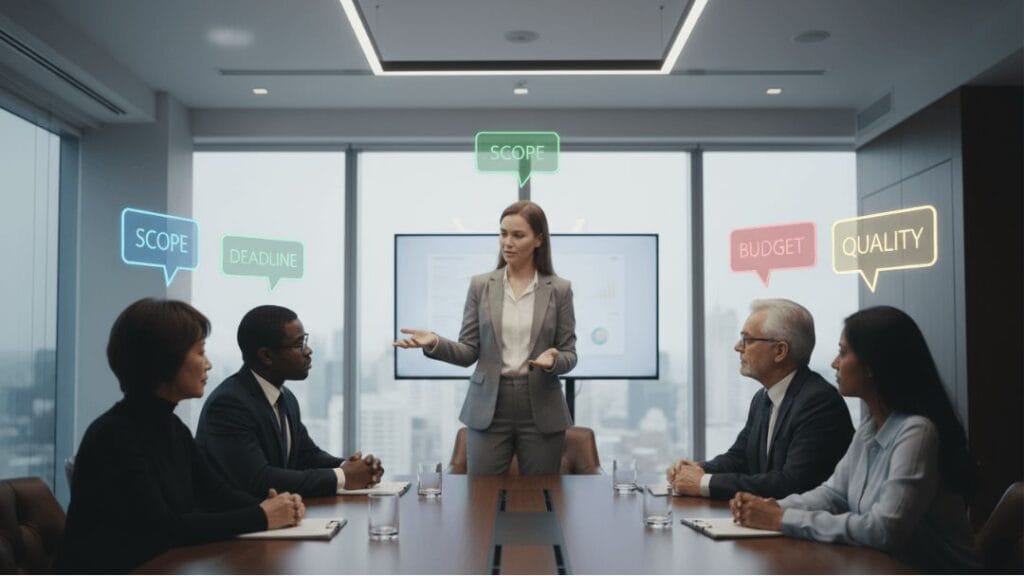
Project management sits at the intersection of accountability and limited authority. You’re responsible for outcomes you can’t directly “command” into existence. That mismatch is the root of most PM stress.
The role is a pressure funnel
Every group has a different definition of “success,” and the PM becomes the person who translates, negotiates, and reconciles competing realities. When those realities collide, the impact lands in your lap first.
- Executives want predictability, timelines, and risk containment
- Customers want responsiveness and outcomes (often fast)
- Sales wants flexibility to close deals
- Engineering wants clarity, stability, and realistic tradeoffs
- Design wants time to explore and validate
- Operations wants repeatable, supportable delivery
Uncertainty is treated like a personal failure
Many organizations say they understand uncertainty—until it shows up on a schedule or a status report. PMs are often expected to “know” what is unknowable early on, and to be certain about estimates that are inherently probabilistic.
PM work is mostly invisible until it isn’t
If you prevent a risk from becoming a fire, it looks like nothing happened. If you miss a risk and it becomes a fire, it looks like you failed. This asymmetry quietly trains PMs to live on alert.
Why PMs Absorb the Blame (Even When It Isn’t Their Fault)
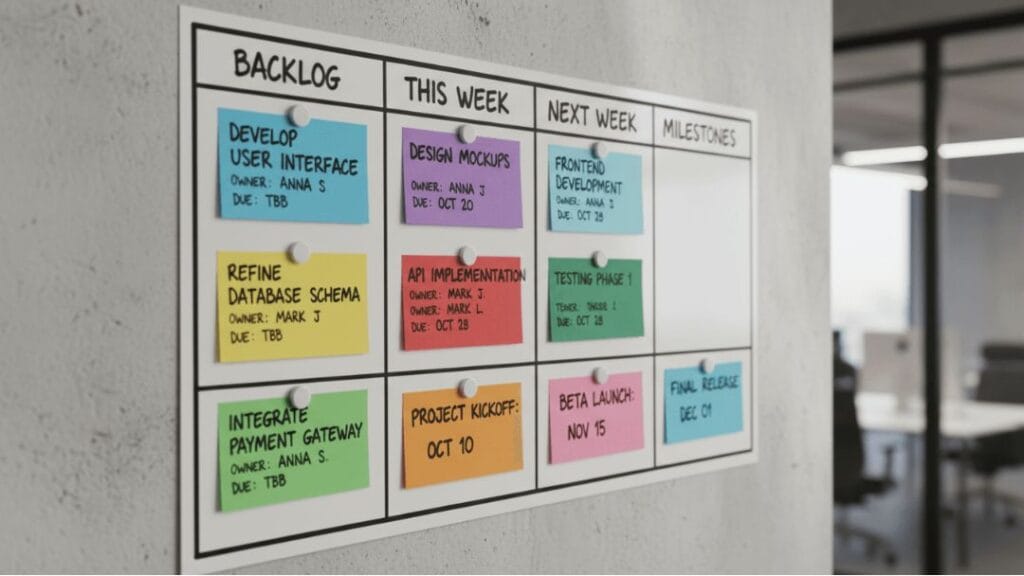
Blame tends to attach to roles that are easiest to name, easiest to route frustration toward, and most closely associated with “ownership.” PMs check all three boxes.
The PM is the face of the plan
Even when the plan was built collaboratively, the PM is usually the one presenting it. When a plan fails, the presenter becomes the symbol of the failure.
Status reporting turns into a lightning rod
When stakeholders are anxious, they look for “the person” who can reduce anxiety quickly. That person is often the PM—because the PM is perceived as the hub, even if the root cause sits elsewhere.
Accountability without authority is structurally scapegoat-friendly
If a team member misses a commitment, a dependency slips, or a requirement changes late, the PM is still asked: “Why didn’t you prevent this?”
- Because preventing requires authority, incentives, and shared ownership
- Because some risks can only be reduced, not eliminated
- Because you can’t control what you’re not allowed to change
The Hidden Work: What Great PMs Actually Do All Day
Strong PMs don’t just “track tasks.” They make delivery possible by shaping the environment where decisions are made well and early.
Decision architecture
PMs create the conditions for good decisions: clear options, known tradeoffs, and explicit ownership. Without that, teams drift into passive consensus and late surprises.
- Clarify what decision is needed and by when
- Define decision-maker and inputs
- Document tradeoffs and assumptions
- Capture the decision and communicate it cleanly
Expectation management (the real schedule)
The most dangerous gap in a project is not between tasks—it’s between expectations and reality. PMs constantly close that gap so delivery doesn’t become a credibility crisis.
Risk translation
Engineers speak in complexity, uncertainty, and technical constraints. Leaders speak in probability, impact, and mitigation. PMs translate one into the other—without distorting the truth.
Conflict mediation
Conflict isn’t a sign of failure. It’s what happens when smart people with different incentives share a roadmap. PMs keep conflict productive instead of personal.
Staying Calm Under Pressure Without Becoming Detached

Calm isn’t the absence of stress—it’s the ability to stay oriented when stress is present. PM calm is a skill set, not a personality trait.
Use a “signal over noise” status approach
When everything feels urgent, stakeholders stop hearing you. A calm PM curates the message so the team can focus and leadership can act.
- Lead with what changed since the last update
- Separate facts from interpretations
- Name risks early, with a mitigation path
- Be explicit about what help is needed and who owns it
Build a repeatable cadence to reduce anxiety
Unpredictable communication creates panic. A stable cadence creates trust, even when the news isn’t great.
- Weekly stakeholder update at a consistent time
- Regular risk review with owners
- Dependency check-ins with partner teams
- Short decision meetings with clear agendas
Separate “being responsible” from “being responsible for everyone’s feelings”
PMs often become emotional shock absorbers. It’s noble, but it’s also exhausting. You can be empathetic without carrying everyone’s stress.
Staying Credible When Things Go Sideways
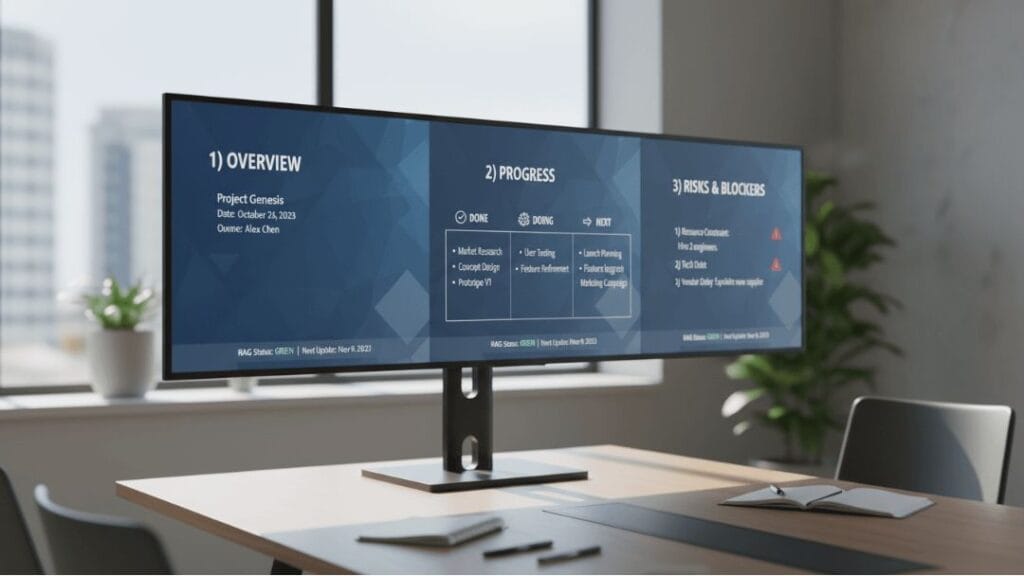
Credibility isn’t built by never having problems. It’s built by naming problems early, framing them accurately, and driving decisions that reduce impact.
Don’t overpromise to buy temporary peace
Overpromising creates a short-term reduction in stakeholder discomfort and a long-term credibility collapse. When you’re tempted to promise, trade it for a concrete next step.
- Replace “We’ll hit the date” with “We’ll confirm feasibility by Thursday with options”
- Replace “It’s fine” with “Here’s what’s at risk and what we’re doing”
- Replace “We can do both” with “We can do both if we drop X or extend Y”
Use a clear tradeoff language
Tradeoffs aren’t negativity—they’re reality. Credible PMs make tradeoffs explicit so stakeholders feel included rather than surprised.
Tell the truth in a way people can use
Truth without structure sounds like chaos. Structure without truth sounds like spin. Aim for both: what is happening, why it’s happening, what it means, and what happens next.
Practical Systems That Make PM Life Easier (and Projects Healthier)
The goal isn’t to “work harder.” It’s to build systems that reduce rework, prevent confusion, and distribute ownership across the team.
Create one source of truth
A project without a single source of truth becomes a rumor mill. Your documentation doesn’t need to be perfect—just dependable and current.
- A living roadmap or milestone plan
- A decision log with dates and owners
- A risk register with mitigations
- A dependency list with due dates and contacts
Make ownership visible
Ambiguity is a delivery killer. When ownership is clear, issues move faster and blame drops.
- Assign a single owner per deliverable
- Define what “done” means for each milestone
- Clarify who approves and who contributes
Use a lightweight meeting design
Meetings can either drain momentum or create it. A PM’s job is to make meetings decision-oriented rather than performance-oriented.
- Always state purpose: decide, align, or inform
- Send pre-read for complex topics
- End with decisions, owners, and deadlines
Standardize escalation
Escalation isn’t drama. It’s a mechanism. If you wait until you’re desperate, escalation feels emotional. If you escalate early with a clear ask, it feels professional.
- Define what triggers an escalation (time, risk level, blocker age)
- Escalate with options, not just problems
- Ask for a specific decision or resource
How to Protect Yourself from Burnout Without Lowering Standards
PM burnout often comes from sustained vigilance: feeling like the project fails if you stop paying attention. The fix is not caring less—it’s building resilience and shared responsibility.
Stop treating every issue as a personal emergency
Urgency is contagious. Before reacting, classify the issue.
- What is the real impact (cost, time, scope, trust)?
- What is the latest moment a decision is needed?
- Who can solve it without you?
Set boundaries that keep you effective
PM boundaries are not about being unavailable. They’re about preserving your ability to think clearly.
- Protect focus blocks for planning and writing
- Limit status pings by directing people to the source of truth
- Batch admin work so it doesn’t fragment your day
Build a support network inside the organization
PM work is easier when you’re not alone. Strong relationships make dependency resolution and escalation dramatically less stressful.
- A trusted engineering partner who will tell you the truth early
- A design or product peer who pressure-tests scope decisions
- An operations or support ally who flags downstream risks
The “Behind the Curtain” PM Mindset: Quietly Leading Without Needing Control
The strongest PMs aren’t the loudest. They’re the most clarifying. They reduce confusion, raise the quality of decisions, and keep momentum—without trying to be the hero.
Anchor on outcomes, not activity
Busy teams can still fail. Outcome-focused PMs keep asking whether the work is moving the needle toward the goal.
Be the person who names reality early
If you consistently surface reality—risks, tradeoffs, constraints—people learn they can trust you. That trust becomes your leverage.
Share the load by sharing the truth
When you make ownership visible and decisions explicit, the pressure stops collecting in your body and starts distributing across the system where it belongs.
A Simple Checklist for the Next Time You Feel the Heat
When pressure spikes, return to fundamentals. This quick checklist helps you stabilize the situation without spiraling.
- State the problem in one sentence
- List what changed and what is now at risk
- Identify the decision needed and the decision-maker
- Offer 2 to 3 options with tradeoffs
- Assign owners and deadlines for next steps
- Communicate the update in a calm, structured way
Behind the curtain, project management is leadership through clarity. You won’t always get credit for what you prevent, but you can build a reputation for being the person who keeps teams steady, decisions honest, and delivery real.
References
https://www.atlassian.com/work-management
for more insights please subscribe to https://projifi.blog/


