
Why this article exists
Most organisations treat tendering as a writing problem.
Get the right words. Structure the proposal well. Present the pricing attractively. Win the bid.
In my experience, that framing misses almost everything that actually matters.
Tendering failures are rarely about poor writing. They are about poor reading, poor prioritisation, and poor alignment between the people selling the project and the people who will have to deliver it.
This article examines the three failures I have seen repeatedly across complex project tendering — and what genuinely better practice looks like.
In brief
A tendering strategy that prioritises writing over reading, urgency over accuracy, and sales over execution alignment will win bids and lose money. The Arabian horse gets sold. The donkey gets costed. And nobody realises the difference until execution begins.
Failure 1: The assumption trap
The most expensive person in a tendering organisation is a proposal engineer who assumes rather than clarifies.
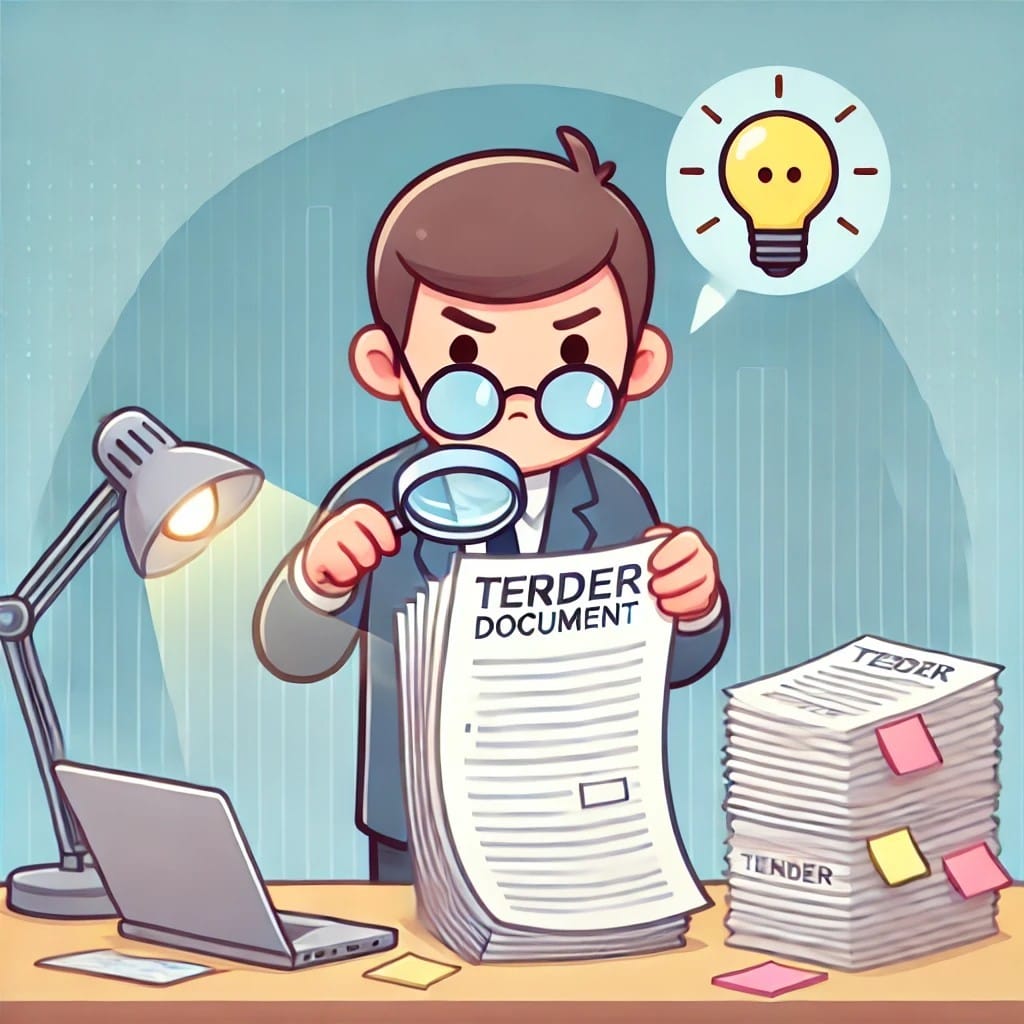
The skill looks straightforward. Read the tender document carefully. Understand exactly what the client is asking for. Raise clarification questions where requirements are ambiguous. Build the bid on accurate foundations.
In practice, proposal teams routinely skip the clarification step.
Sometimes it is time pressure. Sometimes it is the mistaken belief that raising questions signals incompetence or reduces the client’s confidence in your capability. Sometimes it is simply habit — filling gaps with familiar assumptions rather than stopping to verify.
The result is a bid built on interpretation rather than understanding.
The contract gets signed. Execution begins. And somewhere in the first weeks of delivery, someone reads a clause carefully for the first time and the gap becomes visible.
You budgeted to deliver a donkey. The client expected an Arabian horse. The irony is that nobody in the room during tendering knew the difference — because nobody asked.
The clarification question that felt risky to raise during bidding would have cost an hour. The misalignment it would have prevented costs months.
Why clarification questions get avoided
In my experience, proposal teams avoid raising clarification questions for two reasons.
The first is commercial anxiety — the fear that asking questions signals uncertainty, reduces client confidence, or gives competitors an advantage. This is almost always wrong. Clients generally respect bidders who engage seriously with their requirements. Thoughtful clarification questions signal competence, not weakness.
The second is internal pressure — the environment simply does not allow time for careful reading. When everything is urgent and every submission was due yesterday, deep comprehension becomes a luxury that the schedule cannot accommodate.
Both of these are fixable. Neither gets fixed until the organisation acknowledges they exist.
Failure 2: The pressure problem
Proposal engineers cannot read carefully when they are drowning.
Sales and marketing teams, under pressure to pursue every opportunity, treat all tenders as equally urgent. The pipeline must be filled. The submission must go out. The deadline is always imminent.
The proposal team works in permanent crisis mode — copying from previous bids, making assumptions, recycling solutions that worked on different projects for different clients — not because they are incompetent, but because the environment makes careful work structurally impossible.
This is a management failure, not a proposal failure.
Peace of mind is not a luxury in tendering. It is a prerequisite for accuracy. A proposal engineer given the time and focus to read a tender document properly will produce a fundamentally different — and more profitable — submission than one operating under constant pressure to produce output quickly.
The practical implication is straightforward: not everything can be a priority. Sales and marketing leadership need to make explicit decisions about which opportunities warrant serious investment of proposal time and which do not. Without that prioritisation, the proposal team spreads itself thin across everything and does justice to nothing.
The Go/No-Go decision: vital in theory, weak in practice
Every tendering organisation has a Go/No-Go process.
In my experience, very few implement it with genuine discipline.
The Go/No-Go decision exists to ask a simple question: should we bid on this at all? Does the opportunity align with our capability? Is the scope something we can price accurately and deliver profitably? Is the client someone we can build a productive relationship with?
In practice, the answer is almost always Go — because walking away from an opportunity feels like leaving money on the table, because pipeline targets create pressure to pursue volume over quality, and because the people making the Go/No-Go decision are rarely the people who will have to deliver the project if it is won.
A more disciplined Go/No-Go process would eliminate a significant proportion of the bids that get won and then delivered at a loss. The discipline to walk away from the wrong opportunities is one of the most valuable capabilities a tendering organisation can develop — and one of the least practised.
Failure 3: The silo problem
Proposal and sales teams routinely work in isolation from the people who will actually deliver the project.
Scope is defined without operations input. Timelines are committed without scheduling review. Costs are built without the people who understand what execution actually requires.
When execution teams are consulted — and they are not always — their input does not always survive the commercial process intact. There is a pattern I have seen repeatedly: execution raises a concern, sales acknowledges it, and then the bid goes out with the concern quietly resolved in favour of what makes the numbers work rather than what makes the delivery realistic.
This is not always cynical. Commercial pressure is real, and the instinct to find a way to make an opportunity work is understandable. But when it becomes a pattern — when execution input is sought as a formality rather than genuinely integrated — the organisation is systematically building delivery risk into every contract it signs.
The projects that deliver well are almost always the ones where the people selling the work and the people delivering it are genuinely aligned before the contract is signed. Not consulted at the end. Aligned throughout.
This connects directly to the broader challenge of project execution — the decisions made during tendering define the conditions under which delivery will either succeed or struggle.
What better tendering practice looks like
The three failures above share a common thread: they are all about the conditions under which tendering work happens, not just the quality of the work itself.
Fixing them requires changes to process, priority, and culture — not just better proposal writing.
On reading and comprehension:
The proposal team’s primary skill should be interpretation, not writing. The ability to read a complex tender document carefully, identify what is actually being asked, surface ambiguities, and raise precise clarification questions is more valuable than the ability to write compelling prose.
Organisations that understand this invest in developing that skill deliberately — through structured tender review processes, through creating the time and space for careful reading, and through treating clarification questions as a sign of rigour rather than weakness.
On prioritisation:
Sales and marketing leadership need to make explicit, defensible decisions about which opportunities get serious proposal investment. A smaller number of well-understood, accurately priced bids will almost always outperform a larger volume of rushed, assumption-heavy submissions.
The pipeline metric that matters is not how many bids went out. It is how many bids were won profitably.
On alignment:
Execution teams should be involved in tendering from the beginning — not consulted at the end. Their input on scope, timeline, and cost realism should carry genuine weight in the bid decision, not be filtered through a commercial lens that has already decided what the answer needs to be.
When execution raises a concern during tendering, the organisation should treat it as information worth acting on rather than an obstacle to be managed.
This is also where procurement strategy plays a critical role — how scope, responsibilities, and commercial terms are structured at tender stage determines how much execution risk gets inherited at contract stage.
The read-first approach in practice
Before any proposal writing begins, the tender document deserves at least two serious passes.
The first pass is structural — understanding what the document contains, how it is organised, where the evaluation criteria sit, and what the mandatory requirements are.
The second pass is interpretive — extracting exactly what is being asked, identifying gaps and ambiguities, cross-referencing requirements across sections, and building a clear picture of what a compliant, competitive response actually requires.
Only after both passes should the team move to the interpretation meeting — where sales, proposal, and execution align on a shared understanding of the requirement before a single word of the response is written.
This process takes longer upfront. It saves significant time, money, and pain downstream.
As I have written about separately in why risks derail projects, the risks that do the most damage are almost never the ones that appear during execution. They are the ones that were built in during the decisions that preceded it.
Tendering is where many of those decisions get made.
Frequently Asked Questions
Why do proposal teams make assumptions instead of raising clarification questions?
In my experience, two reasons dominate. The first is commercial anxiety — the mistaken belief that asking questions signals weakness or reduces the client’s confidence. The second is time pressure — the environment simply does not allow for the careful reading that good clarification requires. Both are management problems with management solutions.
What is the real purpose of a Go/No-Go decision?
To ask honestly whether the organisation should bid at all — based on capability alignment, scope clarity, delivery realism, and commercial fit. In practice, most Go/No-Go processes default to Go because of pipeline pressure. Genuine Go/No-Go discipline, applied consistently, eliminates a significant proportion of the bids that get won and delivered at a loss.
Why does the silo between sales and execution cause so much damage?
Because the people making commitments during tendering are rarely the people who have to honour them during delivery. When execution input is sought as a formality rather than genuinely integrated, the organisation systematically builds delivery risk into every contract it signs. The gap between what was sold and what can be delivered is where projects go wrong.
What does “delivering an Arabian horse when you costed a donkey” mean in practice?
It means winning a contract based on a misunderstanding of what was actually required — and only discovering the gap when execution begins. The scope was misread. The requirement was assumed rather than clarified. The contract was signed on the basis of the wrong interpretation. The commercial and delivery consequences follow from there.
How should execution teams be involved in tendering?
From the beginning, not at the end. Their input on scope realism, timeline feasibility, and cost accuracy should be integrated into the bid from the earliest stages — not reviewed at the final submission stage when the commercial position has already been established. When execution raises concerns, those concerns deserve genuine engagement rather than commercial override.
What is the single most important change an organisation can make to its tendering process?
Create the conditions for careful reading. Give proposal teams the time, focus, and prioritisation clarity to read tender documents properly before building responses. Everything else — better writing, stronger alignment, more disciplined Go/No-Go — follows from that foundation.
Final thought
Tendering is not a writing exercise.
It is a reading exercise, a prioritisation exercise, and an alignment exercise. The writing is the last step — and it is the easiest one.
Organisations that treat tendering as primarily a proposal writing challenge will continue to win bids they cannot deliver profitably. The Arabian horse will keep getting sold. The donkey will keep getting costed. And the gap between the two will keep surfacing at the worst possible moment — when the contract is signed and execution has begun.
Slow down before you write. Read carefully. Ask the clarifying questions. Align sales with execution before the bid goes out.
The extra time it takes upfront is nothing compared to the cost of getting it wrong.
If this resonated, subscribe to Projifi — practitioner insights for complex projects that must deliver.


